Showing posts with label Legends. Show all posts

Sunday, 19 August 2007

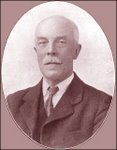
Frank Barson : the finest football brain of his time

If anyone recalls Frank Barson these days, it is as "the hardest man of all". He features in lists of the top 50 hard men of football (no 35, as it happens, but Stuart Pearce of all people got to number 2), the 50 worst tackles, the 10 longest suspensions. He is most remembered for the likely apocryphal tale that he took a gun, rather than an agent, to his contract negotiations.

There was much more to Barson than that.

Frank Barson was a very talented half-back, although later in his career he was increasingly prone to fits of very bad temper. It was said then that the mere mention of the fact that Barson was playing against them led opposition players to claim they were injured, rather than play against him.

Yet Percy Young says one contemporary who played with Barson saluted him as “the finest football brain of his time”.


Frank Barson


Frank Barson was born in Grimesthorpe, Sheffield, on 10 April 1891.

In his working life, he started as a blacksmith. After starring for Firshill Council and Grimesthorpe schools, he started his football career as an amateur at Albion FC.

In 1909 he signed for local outfit Cammell Laird FC and it was two years later in July 1911 that he began his professional football career with Barnsley.

The Barnsley Battlers

The historian Richard Holt has said, “There was a self-conscious cult of northern aggression, which applauded the violent antics of some players”, and Barson learned his trade with the “Barnsley Battlers”, who were amongst the main practitioners. In Holt’s words, “Clubs like Barnsley, fed by miners from the nearby coalfield, abounded in stories of men working double shifts and walking twenty miles to play a match”.

It was whilst at Oakwell that Barson's notorious temper first became evident; before he could even start his first game for the Tykes he had to serve a two month suspension, following a brawl with a few Birmingham City players in a pre season friendly. On another occasion he had to be smuggled out of Goodison Park after a cup-tie to avoid a waiting crowd, who had been incensed by his behaviour during the game.

Barnsley's 1912 FA Cup semi-final tie with Southern league Swindon was notoriously brutal, as Barnsley set out to “curb the pace” of Swindon’s star player, the amateur international, Harold Fleming. “Barnsley deliberately kicked Fleming … until he had got seriously injured, and the local press jeered at the southerners for making an official complaint”. After a 0-0 draw, which Swindon finished with nine men, Barnsley won 1-0 in the replay (against a team without Fleming, who didn’t play again for nearly a year).

Barson wasn’t selected in this Barnsley team, which went on to beat West Brom in the Cup final replay at Bramhall Lane (another solitary goal, after another 0-0 draw), but he clearly learned a lot about uncompromising defence. In his own words, "at Barnsley they taught me to be a robust player".

After the war, Barson had a very public falling out with the Barnsley directors over travelling expenses and he joined Aston Villa in October 1919, for a fee of £2850. Barnsley were in financial difficulties, and the money was welcome to them. Despite their differences, Barson was generous enough to refuse to take his own share of the transfer fee from his old club.

Aston Villa (and England) : the glory years

When the league started again in 1919, the decision to extend the first division to twenty-two teams had made it likely that Barnsley would be automatically promoted from the second division. However, a ballot was instead called and Arsenal went up in their place (the Arsenal chairman later admitting to some underhand dealings but, given the circumstances by which United found themselves still in the top division, I won't make too much of that). The wish to play top-flight football may have figured in Barson's decision to leave Barnsley.

On the other hand, it is said that, strangely for such a self-confident man, Barson initially thought himself not good enough for the Villa, and had to be persuaded by their manager, Ramsay. Eventually, Barson moved to Villa in October 1919, making his debut in a 4-1 win at Middlesbrough.

In their book 'Aston Villa: A Complete Record, 1874-1992', David Goodyear and Tony Matthews say: "Despite several brushes with authority, Frank Barson was a truly great centre half, a fierce tackler and dominant in the air. He became a legend in football, probably serving more suspensions than any other English defender. He revitalised a flagging Villa team. His dynamic personality brought the best out of the players."

Whilst undoubtedly being a huge asset to Villa, he once again fell out with the powers that be at the club, this time over his refusal to re locate to Birmingham, due to business commitments in Sheffield.

This caused him particular problems on one occasion, when he and goalkeeper Sam Hardy, who lived in Chesterfield, were forced to walk seven miles to Old Trafford in bad weather after missing a rail connection. Naturally, in the best Barnsley tradition, Barson was the best player on the pitch that afternoon.

Barson's living arrangements caused further controversy on the opening day of the 1920-21 season, when he and Clem Stephenson missed a defeat at Bolton. Both were suspended by the Villa board for fourteen days for “refusing to play” and given a month to arrange to take up residence in Birmingham. (Times 24.09.20) Barson still refused to move house. Nevertheless, he was appointed Villa captain in succession to Andy Ducat, although there are suggestions that he merely decided he wanted the job and nobody dared argue with him.

He celebrated his appointment as captain by scoring with a header from thirty yards out against Sheffield United, for many years renowned as the longest headed goal ever scored.

On 9 February 1920, Barson was selected for an International Trial, ironically enough playing for “The South” against an England XI at West Brom (The Times, 3.2.20).

He clearly impressed the selectors for in due course, in March, he was selected for England alongside his Aston Villa club half-back colleague, Andy Ducat, a talented sportsman who also played county cricket for Surrey.

In fact, 15 March 1920, when he ran out for England against Wales at Highbury, was to be Barson’s one and only international appearance. In difficult conditions, with the ground cutting up badly after heavy rain, the Welsh won 2-1, the 44 year-old Billy Meredith featuring prominently for Wales. According to The Times, “delay in finishing attacks and uncertainty in defence accounted for England’s defeat”. But this was the first time Wales had beaten England since 1882. Although Barson, along with his fellow half-backs, was said to have “supported the forwards admirably and assisted in frequent attacks”, he never played for England again. (Times, 16/3/20)

Barson also featured prominently in Villa’s fine cup run that season. In the semi-final against Chelsea on 27 March 1920, he had to deal with their star player. “Cock was closely watched by Barson and it soon became apparent that the centre-half had the Chelsea player well under control. This was the first indication that Chelsea might be defeated, as the wing forwards appeared at a loss what to do with the pivot of the line ineffective”. Villa scored five minutes before the interval and never looked like losing after that, going on to win 3-1. (Times, 29.03.20)

On 24 April 1920, the first Cup Final since the end of the war took place at Chelsea’s ground at Stamford Bridge. The change of venue was lamented by The Times as eliminating the “beanfeast” atmosphere of Crystal Palace and its accompanying fairground, and making the game “just like any other cup-tie”. Aston Villa took on Huddersfield Town and won by the only goal of the game, scored in the first period of extra time. (Times 23.4.20)

Probably the most famous story about Frank Barson (apart from the gun legend)concerns this 1920 FA Cup Final. Inevitably, it seems, he was warned about his behaviour by the referee J.T. (Jack) Howcroft – but this time it happened in the dressing room before the match started. "The first wrong move you make, Barson, off you go" he was told.

It was a hard game in those days. Don Davies pointed out that, "Referees who had to handle man and crowds in those days were something more than referees; they were social reformers, purifiers of the public morals".

Howcroft of Bolton was the leading referee of the day and highly demonstrative in everything he did. "The complete master of the grand manner", said Davies. "To men like J.T. Howcroft refereeing was life; unceasingly he studied the part, rehearsed the part, acted the part;.... and one feels sure that he took no share in a game without believing that of twenty-five performers involved (including the linesmen) the greatest of these was Howcroft".

Perhaps Howcroft also had an eye to what might make a good story in the years to come, but in truth he was merely carrying to an extreme one of his cardinal principles, "Dive straight in and get a grip at the start". He repeated the pre-match threat to Barson a couple of years later when officiating another Villa game. Despite this, the two men are said to have always retained a healthy respect for each other.

Opposing crowds hated Barson, so much so that he was forced to defend himself publicly on the grounds that he had been "brought up to play hard and saw nothing wrong with an honest to goodness shoulder charge".

The Times pointed out, “A player like Barson …. is not loved by any but members of his own crowd, but ruthlessly and fearlessly he manages to break up attack after attack” (TT 5.3.21)

The beginning of the end to his time at Villa came following a match against Liverpool. Barson had invited a friend of his to wait in the dressing room while he got changed, and this drew a rebuke from a director. The disciplinarian Rinder became involved in the argument and when Barson refused to apologise, his Villa days were numbered. Even Frank Barson couldn't get the better of Fredrick Rinder. A seven day suspension was the result and Barson, his sense of justice offended, responded with an immediate transfer request.

Manchester United


It is more than possible there was also a financial element underlying this dispute with the club. Villa actually did offer Barson good terms to re-sign at the beginning of the following season, but he simply refused to play for the team again. He turned down offers from several clubs but eventually joined Manchester United in late August 1922. Villa had wanted £6,000 for his signature, then £5,500. United offered £4000 and Villa eventually settled for a reduced fee from United of £5,000, which was still a record fee for a defender.

Clearly, despite the maximum wage, there was also considerable discussion about "personal terms". Apart from anything else, Barson was apparently promised his own pub, so long as United gained promotion within three years. He also received permission from the Old Trafford board to live in Sheffield and to train at Rotherham.

At United, Barson expected special treatment. More precisely, he expected extra money, in an envelope, slipped into his pocket or left on a shelf for him to pick up. “Where’s the doin’s?”, he roared at the trainer before one match, when no package was to be seen. “I’m not taking my bloody coat off till I get it”.

The team he joined in the Second Division was not a typical United side. It had a solid defence, but the forwards were disjointed. As one of the team said, “When we were a goal down we knew we had had it”. Barson developed a fine understanding with his goalkeeper, Alf Steward, who took over from the veteran Jack Mew in 1923, exemplified by the way Barson would frequently head an opposing corner safely back to the keeper from close range. Behind him, Moore and Silcock were a fine pair of full-backs and his half-back partners were accomplished players. But the forwards rarely seemed to click.

Barson’s time at Old Trafford was plagued by injuries, but he was given the captaincy and immediately proved a commanding figure. Within the required three seasons, he led United to promotion back to the First Division. Coming into the last game of the 1924-25 season, United were lying second in Division Two, but could still be overtaken by Derby County. Fittingly for the great defender, it was a 0-0 draw with his old club Barnsley that earned United the necessary point to guarantee promotion. United conceded only 23 goals that season.

Despite the games he missed through injury, Barson was regarded as a hero in Manchester, although he didn't welcome undue flattery. Off the field, he was said to be a mild-mannered, considerate man. The story goes that when Frank opened the door of his new pub he was swamped in the rush and decided then and there that running a pub was not the life for him. In fact, he was so sick of such attention that he immediately gave the business to his head waiter.

The first season back in Division One was successful enough, certainly in terms of attendances. In February 1926, 56,661 saw United beat Sunderland 2-1 (albeit somewhat luckily, since Sunderland had an apparently good goal disallowed). The Manchester Guardian said of Barson, he “was a commanding figure; he held the side together at a critical time, and set the example of bold tackling, well-judged passing and not a little daring that was of incalculable value” (MG 25.02.26). Barson’s form led Arsenal to make enquiries about his availability befoe Christmas.

Sadly, one of his worst games came against City in the FA Cup semi-final, United’s first semi-final since the glorious pre-war days. City won 3-0 and Barson's mistake was responsible for their third goal.

United finished the season 9th. The change in the off-side law cannot have helped a team which had based itself on a resolute defence.

John Chapman, the manager who signed Barson, preceded him out of Old Trafford, "suspended forthwith from all involvement with football" by the FA in October 1926, because of alleged improper conduct whilst acting as the club’s Secretary-Manager. The full details of the charge were never made public, but United had little option but to dispense with their Manager’s services.

Barson’s injury plagued six years at Old Trafford ended after making 140 League appearances and scoring 4 goals for the Red Devils he joined Watford on a free transfer in May 1928

Later Years

Barson's notoriety reached a high in 1928. On September 29 he was sent off for allegedly kicking Temple, the Fulham outside right, while playing for Watford against Fulham. On October 16, the FA issued the statement that “F Barson of Watford is suspended from today from taking part in football until the end of the present season”, a draconian period of some seven months. (Times 17.10.28) Five thousand fans took up his cause by signing a petition, which was delivered to an unsympathetic Football Association by the mayor of Watford. The petition was ceremonially burned in the mayor's presence.

Barson didn't play again for Watford. Exactly a year after leaving Old Trafford he accepted the post of player coach at Hartlepool United. Strangely, within five months (October 1929) he had signed amateur forms for Wigan Borough. He became a professional for the club in July 1930 in what was to be was Borough’s last full season as a Football League club. He was 39 at the time, and at the end of his career, but he appeared 19 times in a Wigan shirt. His last appearance was against Accrington Stanley on Boxing Day 1930, when he got sent off in the 83rd minute for allegedly jumping on an opponent.

Frank was inevitably the club’s highest paid player and in an effort to stabilise the club’s terrible finances he was off loaded to Rhyl Athletic in June 1931. It did Wigan no good. Finances were at rock bottom, and another League ultimatum of pay up or resign couldn't be met. A public appeal seemed to indicate the people of Wigan just didn't want a football team, and on 24 October 1931 Wigan Borough played their last League game at the Racecourse Ground, crashing 5-0 to Wrexham.

And Barson himself never played league football again; one story told in Wigan is that this was because the FA inquiry into his sending off adjourned itself sine die”, stopping him playing until it had reached a decision, which it had no intention of ever doing.

In May 1932 he became the player manager of Rhyl where he remained until his contract was terminated in March 1935. Within three months he re-surfaced as the manager of Stourbridge, but an offer to return to Aston Villa as youth coach in July 1935 meant he gave up the job as soon as a replacement was found. Three months after his appointment as youth coach he became the senior coach and head trainer at Villa Park until the outbreak of the Second World War.

After the war, Barson became the trainer at Swansea Town from June 1947 until February 1954. He finished his career in May 1956 after previously spending almost two seasons as the trainer at Lye Town.

Barson as a Legend

Percy Young, the historian of Manchester United, said of Barton, “To the thoughtless, who do not discriminate between toughness and roughness, he was a rough player. Nor did a dominant personality and an instinct for natural justice endear him to referees. He tackled ruthlessly, but cleanly, and used his weight, but fairly. He had the instinct of a duellist, to whom a contest is a personal issue between two combatants. If Barson was maliciously treated by an opponent he issued due warning of the wrath that was to come. He also frequently advised the referee. Nor was this confined to his own interests, for unfair tactics against a colleague roused him to fury, Thus he inspired admiration for his skill and affection in those who played with him."

In his book Soccer in the Blood, his fellow player Billy Walker (Aston Villa 1919-33) wrote of Barson "Perhaps the greatest of all the great characters in my album - he played with and against me - was the one and only Frank Barson.

"Frank was a Sheffielder, a truly great footballer and personality and a card. He was never ashamed of numbering amongst his friends the notorious Fowler brothers, who were hanged for murder."

The Fowlers were part of the Sheffield gang wars, strong-arm men working on behalf of one of the local bookmakers and other criminals. They were convicted of leading a group who killed a local man, in the culmination of an argument that had started over a barmaid, but then turned into an argument about their reputation.

In fact, the story has it that at the start of the 1925-26 season, when United were at last back in the top division, Frank received a good luck letter from the brothers, who at the time were in the condemned cell at Armley Prison, Leeds. On Wednesday 2 September, Barson scored the opening goal in United’s second game of the season, a 3-0 victory over his old club Villa at Old Trafford. After three years with the club, it was his first goal for United. Over the following two days, on the Thursday and Friday of that same week, first William Fowler and then Lawrence Fowler went to the gallows.

Walker claimed that Barson did more to make him the great footballer he became than did anyone else. However, that didn't stop Frank from behaving in his usual style when they were in opposition. When playing against Manchester United, Walker once laid on a goal and the latest of all late tackles then put him out of action for three weeks. In September 1925, on his first return to Villa Park, Barson unceremoniously dumped his friend Walker onto the cinder track. The United player commiserated with Walker in the dressing-room. “You know I would never hurt a hair on your head, lad,” he said. Certainly, off the field, Barson is always portrayed as a placid sort of man.

It is towards the end of his career that legend suggests Barson attended negotiations for a pay rise at one of his clubs carrying a gun, probably a shotgun, but the story isn’t precise even about which club. Some other sources even suggest this was whilst he was Villa, which would place it much earlier in his career.

There are records of at least 12 suspensions during Barson's career, although these seem to include club-imposed suspensions such as those at Villa.

Frank died in Winson Green, Birmingham on 13th September 1968. There are those who argue that returning to Birmingham to die shows that Barson’s true loyalty always remained with Villa.

In November 2004 Barson’s only tangible trophy, the medal presented to him after he helped Aston Villa win the FA Cup in 1920 was put up for sale at Christie's in London, valued at between £5,000 and £7,000. The 15 carat gold medal FA Cup winners' medal was up for sale again in March 2007, this time was expected to fetch up to £6,000.

Sources :

The Independent, (London), Sep 20, 1997
Wigan website
The Times, various
The Star (South Yorkshire) Mar 10 2007
The Hardest Man in History, Dave Woodhall (website)
Don Davies, An Old International, Jack Cox
Sport and the British, Richard Holt
Manchester United, Percy Young

Friday, 3 August 2007

George Livingstone : Both Ends of All the Roads

A remarkable character, George Livingstone not only played for both Manchester City and Manchester United but, like Peter Beardsley and John Gidman, he was also on the books of both Everton and Liverpool. However, Livingstone capped this by also playing for both Glasgow Rangers and for Celtic.


George Turner Livingstone

Born : 5 May 1876
Birthplace: Dumbarton, Scotland
Height: 5' 10"
Weight: 11st 6lbs / 12 st

Dumbarton-born Livingstone started out with local sides Sinclair Swifts and Artizan Thistle before joining Parkhead FC. Over his career, he proved to be an adaptable player, at home as an inside-forward on either side of the field and also at right-half. From Parkhead he moved on to Dumbarton in 1895 and then to Hearts the following year.

He played for Hearts for four seasons, making 23 starts in all in competitive games (19 in the league and 4 in the Scottish Cup). His goal scoring seems to have been fairly prolific, with 28 goals in competitive games and a fair few more in friendlies, including four goals in one game, a 6-2 victory over Leith Athletic. In a public practice match, playing at centre-forward, at the beginning of his first season, he was singled out by the Edinburgh Athletic Times as the best player on the field. At the end of that season, Hearts were champions, but with only three league appearances, there was no medal for Livingstone. In 1898-99, he made more appearances, but Hearts were only runners-up, to a Rangers team that didn't drop a point all season. In April 1900, Livingstone played his last game for Hearts.

From Hearts he "crossed the Border" to Everton, but he didn't feature in the first team there, and it is possible he was only there on loan or trial. Certainly, it seems Hearts received a fee of £175 when he moved on to become a regular at Sunderland as they rebuilt the “Team of All the Talents” which had won the championship three times in the club's first decade. Prior to the start of the 1900-01 season, players such as Jimmy Millar and Livingstone (described as an "excellent acquisition" at the club's AGM) were bought to spice up the attack, along with defender Jim Watson, who would help the team only concede 26 goals in 34 league games. But if Roker Park was a fortress, the team were not as good on their travels and drew a lot of games. A home defeat against Liverpool in the run in ultimately cost Sunderland the title and they finished 2nd despite beating Newcastle 2-0 on the final day of the season. Livingstone was their top scorer with 11 league goals.

After that solitary season, Livingstone moved on to Celtic in 1901, where he played in the losing Scottish Cup Final side of 1902 before being transferred to Liverpool a week later on 30 May 1902.


He scored on his debut for Liverpool on the opening day of the season, 6 September 1902, in a 5-2 win against Blackburn Rovers. However, he only stayed at Anfield for the one season, playing 32 times and scoring three more goals. He also played in one cup match, a first round defeat at Manchester United in February 1903. George was said to have been a joker in the dressing room, but it isn’t clear if this had anything to do with the speed with which he changed from club to club (three clubs in three seasons at this point). At the end of the season, he moved to Manchester City, where he first linked up with the "Welsh Wizard", Billy Meredith.

Around the time he arrived at City the Athletic News said of him, “George Livingstone disdains style. He is all utility and a resolute thrusting forward who not only creates openings for Meredith but opens out the game by playing passes to the other wing …. He makes himself the hub of the game when he is on the ball.”

A report from the Bolton Evening News, Monday November 10, 1903, shows that press interest in football players’ off the field activities is not an entirely modern phenomenon. “Sam Frost, George Livingstone and John M'Mahon, three members of the Manchester City football team, were each fined five shillings and costs at the Manchester City Police Court this morning for behaving in a disorderly manner in Oxford Road last night. The evidence of police constables was to the effect that defendants were shouting and jostling passers-by. Frost explained to the Magistrates that it was "only a bit of fun." The Chairman, Mr W. J. Crossley, pointed out that it was at the expense of the public.”

In 1904, the City team reached their first FA Cup final, against Bolton Wanderers, at Crystal Palace.


The 1904 Cup Final

Saturday April 23rd 1904 dawned with a downpour and the prospects for a traditional sunny day for the final looked bleak but by the time the bulk of the fans arrived to do the early morning tours of London, the sun had burst through for an excellent spring day. The crowd was thought to be disappointing as fans found the cost of travel to London from the North West too much, but it’s estimated that 16.000 arrived by football specials during the night and eventually 61,000 did make the journey. It was a novelty for the two teams , as Bolton’s only previous final was held in Liverpool while Manchester City had never been beyond round two prior to this famous run. The players were also new to the occasion as, for the first time since the first ever final, none of the twenty-two players had previously played in the showpiece event of the season.

There was heartbreak for Bolton’s left half Boyd who failed a fitness test and was ruled out but things were even more dramatic in the Manchester dressing room where Doc Holmes threw a tantrum on being told that his place in the team was going to the amateur Sam Ashworth. Holmes threw his boots through a window.

Teams


Manchester City : Jack Hillman; John Mcmahon, Herbert Burgess; Sammy Frost, Tom Hynds, Sam Ashworth; Billy Meredith (Captain), George Livingstone, Billy Gillespie, Sandy Turnbull, Frank Booth


Bolton Wanderers : D Davies; W Brown, R Struthers; Robert Clifford, S Greenhalgh, A Freebairn; D Stokes, Sam Marsh, W Yenson, W White. R Taylor

The teams came out with City wearing royal blue as opposed to their customary sky blue to avoid a clash with Bolton’s white shirts in the sunshine.


Among the dignitaries in the stands were Prime Minister Balfour (an early patron of City in their Ardwick days), his colonial secretary the Honourable Alfred Lyttleton, himself a cup finalist in 1876, and the famous cricketer W G Grace, accompanied by his England colleagues, CB Fry, Rhodes and Jessop. Harry Lauder and George Robey represented the world of entertainment.

The winning (and only) goal of the game from Meredith was included in the PFA 100 goals to celebrate their centary (No.42) and described thus : "In keeping with much of the rest of his career, Meredith's goal that saw the Cup arrive in Manchester for the Cotton city's first major success was a controversial one and was argued about in Bolton for years afterwards. It was also rather eerily prefigured in a railway poster advertising trips to the capital to see the match. At the end of 20 minutes, George Livingstone, the City inside left, sent a long swinging pass out to the right where Meredith was lurking. There was a pause, as Bolton appeared to think the Welsh Wizard was offside but Meredith wasn't waiting to find out. A report of the day described the score thus 'Full back Struthers was left and Meredith forged ahead and scored practically without opposition. With only keeper Davis to beat, the deed was done quietly but effectively.' "

Billy Meredith duly collected the cup from the Colonial Secretary.


Later, Meredith was quite clear, “What was the secret of success of the Manchester City team? In my opinion the fact that the club put aside the rule that no player should receive more than £4 a week. From 1902 I had been paid £6 a week and Livingstone was paid ten shillings more than that in wages.” So Livingstone must have been some player, to be worth ten shillings more than the great Billy Meredith.


Later career


Livingstone was with City for over three seasons - a long time for him - before signing for Rangers in January 1907, in the great sell-off of the City team which followed their financial scandals. At the same time, of course, Meredith crossed town, together with Bannister and Turnbull, to play their parts in the first, great United team.

After two years at Ibrox, in January 1909, it was on to Manchester United for Livingstone as well, to rejoin Meredith and his other ex-City team-mates, and it was here he spent the remainder of his playing career.


His debut for United came on 23 January 1909 at Bank Street against his old club City, when Livingstone scored twice in United’s 3-1 victory. He played 11 league games, that season, scoring one more goal, and in two cup games. After that first season, most of Livingstone’s appearances were at half-back, rather than inside forward, which may partly account for the scarcity of goals.


The following season he played 16 league matches, without scoring. In the United championship season of 1910-11, Livingstone played 10 league games, again without a goal. These days, that would qualify him for a medal, but it wasn’t the case then and after that season, his appearances for United were no more than occasional.


In 1911-12, he played only once; in 1912-13, he played 2 games, scoring his last United goal against West Brom; in his final season 1913-14, he played 3 league matches and one in the cup, retiring in 1914 shortly before his 38th birthday. In all, he played 46 games for United, scoring the 4 goals.


Perhaps, George was unlucky, given the teams he played for, not to have accumulated more medals. Hearts won the title in 1896-97 and United won the League in 1910-11 but it seems he didn't play enough games to qualify for a medal in either season. And oddly enough the Old Firm teams won nothing during George's time with them.


His solitary FA Cup winner's medal with City seems scant reward for a player who served with the giants of Glasgow, Liverpool and Manchester as well as with Hearts and Sunderland, when those clubs were successful.


George made his Scotland debut in the ill-fated game against England on 5 April 1902, whilst he was still at Celtic. This was the first Ibrox disaster when 26 spectators lost their lives after a part of the wooden terracing collapsed. Although, following a delay of 18 minutes, the match was restarted and played to a conclusion (a 1-1 draw), both football associations later declared it unofficial. For the latter part of the game, several of the players were clearly upset and, on occasion, impeded by the closeness of the crowd, The match for the British Championship was replayed later in the year.

So, for years George Livingstone's "international debut" was ignored and not shown in any official records. However, in 2000, following a debate with the recently-formed International Federation of Football History and Statistics, FIFA decided to acknowledge the official international status of the match, 98 years after it was played.

The IFFHS stated: "If a full international - for whatever reasons - was interrupted it will be registered as an official full international. No national football association [has] the right to liquidate such full internationals (category 'A') and to consider [them] as non-existent.... Under these circumstances the match of April 5th, 1902 between Scotland and England is registered as an official full international."

It is unclear, however, whether any other historical body, or either football association has followed that lead.

Livingstone was also unfortunate to receive just two official caps for Scotland - against England in 1906 (on 7 April Scotland won 2-1 at Hampden ) whilst he was playing for City, and against Wales the following year (4 March 07 , when Wales won 1-0) after he had moved to Rangers.


After retiring from playing, George set up a plumbing and gas-fitting business but he didn't sever his connections with the game. Following a brief spell as Dumbarton manager at the end of World War One he took up the Trainer's role with Rangers from 1920-27 then performed a similar task at Bradford City 1928-35.


George Livingstone died in January 1950, aged 73.


Sources :

Football Wizard, The Story of Billy Meredith, John Harding
red11.com
londonhearts.com
scottishleague.net
lfchistory.net
englandfootballonline.com


Tuesday, 17 July 2007

Phil Chisnall : “I’ve become the answer to a quiz question in recent years,”


Before Phil Chisnall loses his main claim to fame, here is a summary of his career.


(John) Philip Chisnall


Born: 27 October 1942 Park Hospital, Davyhulme, Manchester

Height: 5' 7" Weight: 11st 13lbs

Phil Chisnall took a traditional route to the United first team. As a boy he played for English Martyrs School in Urmston and St Mary's in Stretford, as well as a local team called Dover Park, before representing Stretford Boys, Lancashire Boys and England Boys (six caps).

He was 15 at the time of the Munich air-crash and remembers his mother coming out of the front-door to meet him, to give him the news. "I used to go and watch United one Saturday, City the next" says Chisnall, "but was always a United supporter because we lived so close. I watched Duncan Edwards and the rest of that great team, and the next minute they were gone. It was so sad."

Chisnall and his father had already been courted by United scout Joe Armstrong before Munich and Phil became a part of United's rebuilding. He left school in April, two months after the crash."I left school and went straight to Old Trafford, and at the end of that season I was in the club party which went down to Wembley for the FA Cup final, when we put out a scratch team, with the likes of Ernie Taylor, Bobby Charlton and Alex Dawson. I was straight out of school, but at that age you don't think about things too deeply."

He signed professional forms at 17, and made his first-team debut on December 2, 1961 at Goodison Park. "I remember it well - they had Alex Young and Roy Vernon, and we were hammered 5-1!" said Chisnall.

He is usually described as an inside-right, and mostly wore 8 for United (30 appearances at 8, 14 at 7 and 4 at 10). He insists he was "a midfielder" and was certainly never a major goalscorer.

Over the next three seasons Chisnall played 47 games for United, scoring 10 goals. His first goal was at Maine Road in United's 2-0 win over City in February 1962. He played 13 games that season, 5 in 1962-63 (including his first goal at Old Trafford, against Arsenal).

He was one of three young players who started the first game of the 1963-64 season in place of three members of the Cup-winning side of the previous season. Chisnall, Ian Moir and David Sadler, surprisingly replaced David Herd, Johnny Giles and Albert Quixall. Quixall and Giles left the club soon afterwards.

Chisnall played 28 times that season and scored 8 goals, including his first in Europe (against Willem II) and his first cup goal (in a 5-1 defeat of Sunderland). George Best, then also playing as an inside-forward, who made his debut that season, certainly saw himself as behind Chisnall in the scheme of things. "I couldn't see much hope", Best is quoted as saying by Eamon Dunphy. Perhaps it was Chisnall's part in the humiliating second-leg defeat by Sporting Lisbon in the European Cup quarter-final that changed things. United were 4-1 up from the first leg, but lost 5-0 in Portugal. "Two players, Maurice Setters and Phil Chisnall, a clever skilful inside-forward of whom Busby held a high opinion, were doomed by this dismal performance", is Dunphy's opinion.

In fact, Chisnall played just one more game for United after the Lisbon debacle. His last game was against Wolves at Old Trafford on 28 March 1964.

In 1964 he reckoned the highlight of his time at United was scoring against Real Madrid at Old Trafford in United’s 3-1 victory, but I'm at a loss to know when the game took place .

Certainly, although Chisnall also played four times for the England U-23 side, it seemed he couldn’t establish himself as a regular at Old Trafford.

Decision

“I played for England Under-23s against Germany at Anfield and we won 4-2. I’m not sure whether Shankly was there but it was just before Liverpool came in for me. I remember Matt Busby calling me into his office and saying Bill Shankly was putting in an offer for me. He told me I didn't have to go, but at the time Liverpool were top of the league, on their way to winning it, and United were second.

"The way I looked at it was that Liverpool was just down the road, they were top of the league and I was about to get married. There was a big rivalry in those days in football terms, but there was no battling in the streets. Liverpool had only been in the First Division for two years before they won the league in 1964. They were only just establishing themselves in the top division and the rivalry between United and Liverpool fans wasn’t as strong then as it is now. Liverpool’s real rivals were Everton, while United’s were Man City.

"In fact Matt and Shanks were good mates, or maybe more like father and son. Shanks used to come to Manchester every week for a chat with Matt. When the two teams played, (the players) would have a few pints together afterwards, with no ill will.

"Liverpool was a vibrant place with the Beatles making it big and Shankly reviving Liverpool FC, so I decided to go for it."

Chisnall’s wife suffered more disruption than he did. “The only person who was bothered was the missus,” he said. “I told her I was going to play for Liverpool and it meant she had to take all the curtains down, pack up and move down the East Lancs Road. She wasn’t too pleased.

“No one else said much, even though I was moving between two big teams. Back then it was just a footballer moving from one club to another. I was able to go to Old Trafford and play for Liverpool and get a good reception from the crowd."

Liverpool took 47 points from their last 30 games of the season, after a slow start, to secure their sixth championship title, on 57 points, and qualify for their first European Cup campaign. United were second, four points behind them.

Liverpool Career

Chisnall made his debut for Liverpool as a substitute in the Charity Shield against West Ham, played at Anfield on 15 August 1964.

Ian St John was missing after an appendix operation and his deputy Arrowsmith was carried off the field after ten minutes, with a twisted knee. Roger Hunt moved to centre-forward and Chisnall substituted for Arrowsmith but, according to a contemporary report, “on this display lacked the sharpness and guile to be creative". The match ended 2-2.

Chisnall kept his place for Liverpool’s next game, wearing the number 9 shirt in their first ever European Cup tie against KR Reykjavik in Iceland. A poor clearance of his shot led to Liverpool’s first goal and he then scored their third, in the 57th minute, tapping in after the keeper fumbled a cross from Callaghan. Liverpool won 5-0, Roger Hunt and Gordon Wallace getting two goals each.

In his League debut for Liverpool on 22 August 2004, against Arsenal, Chisnall became the answer to another quiz question when he kicked off the first game ever to be shown on Match of the Day. The programme was shown on BBC2 at 6.30 pm, with highlights of just the one game. As BBC2 at the time was only available to those with 625 line sets living in the London area, the estimated TV audience was 20,000, less than half the attendance at Anfield. The game was introduced by Kenneth Wolstenholme, standing on the side of the pitch, with “expert” comments before and after the game from former Wales international Walley Barnes. Liverpool won 3-2.

Chisnall’s next game for Liverpool was at Elland Road, against Don Revie’s newly-promoted Leeds side. The Leeds side contained Sprake, Reaney, Bremner, Charlton, Giles, the black winger Johanneson and their captain, Bobby Collins who, according to the Yorkshire Post, "made Milne, the current England right-half, look a plodder”. Chisnall was still wearing 9 and “taking St John’s customary deep-lying role”. This was the game when Leeds really announced themselves as a force, beating the champions 4-2. St John returning to fitness, Chisnall was dropped and never really established himself in the Liverpool side again.

He came back into the side only for the last 4 League games of the season, although these included a return to Old Trafford (“I can’t remember getting any stick – it wasn’t like that back then”) and a 2 - 0 win over Chelsea at Anfield (when he scored his only League goal for Liverpool, after 9 minutes ).

The following season, he played only once, although that was in the first leg against Celtic in the semi-final of the European Cup-Winners Cup. Chisnall replaced the injured Roger Hunt in Liverpool's 1-0 defeat at Parkhead.

“Things didn’t really work out for me but I didn’t regret joining Liverpool,” says Chisnall. “It was just circumstance really - I didn’t hit it off. It was a great side with players like Ian St John, Ian Callaghan, Peter Thompson, Roger Hunt, Willie Stevenson, Gordon Milne and Tommy Smith so it was always going to be tough to get into the side.”

Later Career

In August 1967 Chisnall was transferred to Southend United for £12,000. Over the next few seasons he played 161 games for Southend, scoring 32 goals. Southend spent all his time with them in Division 4, and quite a bit of it in the lower half of that Division.

Chisnall (extreme left of middle row) in his last season at Southend

He remained at Southend until September 1971, when he took the opportunity to return to the North-West and signed for Stockport County, thus missing the first promotion in Southend’s history at the end of the 1971-72 season. (County, on the other hand, had to apply for re-election).

Chisnall played 30 League games for County, scoring 2 goals, before retiring at the end of the season. "My knees weren't that clever - I still need a new kneecap now," he said in 2005.

Managers

“In the space of a year I played under Matt Busby, Bill Shankly and Alf Ramsey, who was manager of England Under-23s at the time. There was something about managers whose name ended in the letter `Y'. At United we had Busby, who was the quiet type, and Jimmy Murphy who was the passionate Welshman. At Liverpool it was the other way around, with Shankly the passionate one and Bob Paisley the calming influence. Ramsey was different again, quite prim and proper. He wouldn't be like Sven-Goran Eriksson, letting players tell you about this and that. He was a loner and everyone knew he was in charge. He was like a military man, all smart and talking posh, not like Busby, Shankly, Murphy and Paisley who came out of the shipyards or the coalmines."

And incidentally the manager at Southend at the end of the period when Chisnall was there was Arthur Rowley (see above). Also ending in Y, and the younger brother of United legend Jack Rowley.

Of course, it isn't true - as I've read - that Phil Chisnall was the only player ever managed by both Busby and Shankly, there was at least one other. Denis Law was managed by Shankly whilst he was at Huddersfield, and persuaded by him to sign his first professional contract with them when he was 17. Not bad company all the same.

After Football

"Football was a game to me," Chisnall says. "I played for fun and was given a few quid for it. It's a bit more intense today. We had no agents, apart from my wife, mind you, she used to take 80 per cent, not just ten!"

As was the norm in those days, he travelled to work on an ordinary service bus. "Fans would come up and say 'why did you do that and you should have done that'. I used to think 'bloody hell, a window cleaner's telling me my job' but you felt privileged to be a footballer and had to keep your mouth shut," he recalled. "There were a lot of nice people on the bus though; supporters and players were much closer then. It was fun."

He obviously didn't make a fortune. In the notes for fans produced at the start of the season after he signed for Liverpool, Chisnall listed his "hobbies" as "horse and dog racing, and playing or watching all kinds of sports". Not surprisingly, after retiring, he ran a couple of betting shops, but they didn't really work out: "After tax and overheads you were working for nowt". So he ended up back alongside some of his old school mates, working in Trafford Park. Rumour had it at one time that he was working at Asda, but in fact he worked on the production line at Soreen.

Soreen, makers of the sweet, sticky malt loaf "beloved of sports people", has been based in Trafford Park since 1958. The factory, hidden behind a giant supermarket, apparently employs over 110 people who produce 70% of the malt loaf sold in Britain.

Chisnall retired from there in about 2004, on steroids for rheumatoid arthritis and troubled by his knee and a mild heart attack.

“These days I live close to Old Trafford in Urmston and I like to see both United and Liverpool do well" he says diplomatically, and attends ex-players events at both clubs.

The Heinze saga has recently given Chisnall another little flurry of attention and interviews. However, when The Times contacted him about the Heinze saga, he admitted things had changed since his day. "It is so different now. If Heinze turns up at Old Trafford in a Liverpool shirt, there will be hell to pay.”

Adam Saville, one of his 11 grandchildren, is a winger in the United Academy. "He's a left-footer, so that might help," said Chisnall. Another grandson, Thomas Guest, was on Everton's books and then trained with Stockport.

If I was a Liverpool fan, I wouldn't put too much trust in his diplomacy.


Sources :

IV Stuart Brennan, Manchester Evening News, Sept 17 2005
IV James Pearce, Liverpool Echo, Jul 6 2007
IV Alex Murphy, The Times, Jul 25 2007
IV Louise Taylor, The Guardian, Jul 26 2007
Eamon Dunphy, A Strange Kind of Glory

Other info and stats nicked from various places, including Southend, Liverpool and Leeds web-sites. Sadly, I could find no decent info on any Manchester United or Stockport County websites.